Rooftop Tents & Awnings: How to Plan a Better Camp Setup
- Adventure Guide
- 8 min read
- 15 sections
A rooftop tent and awning can make it much easier to arrive at camp, get set up and start enjoying the trip.
The right combination depends on how often you move, how many people travel, what the 4x4 can safely carry, how much shelter you want and whether the setup needs to work for short weekends or longer touring.
The goal is not to build the most elaborate camp. It is to create a setup that is quick enough, comfortable enough and easy enough to use that you actually want to get away more often.
Quick Takeaway
Choose the sleeping and shelter setup around the way you actually camp.
If you move every day, fast setup and pack-down can matter more. If you stay in one place for several days, the ability to leave camp set up while the 4x4 is driven away may matter more.
Plan the rooftop tent, ladder, awning, canopy access, solar and roof layout together before the mounting points are locked in.
Start With the Way You Camp
Local Weekend Adventurer
Fast setup and pack-down can matter most. A compact sleeping setup, simple awning and easy access to the fridge and camp gear can make quick overnighters much easier.
Family Getaway Explorer
Shelter, sleeping arrangements, shade, wet-weather space and easy access to family gear become more important.
The rooftop tent may be only one part of a broader camp system that includes an annex, awning, ground tent, camper or caravan.
Long-Term Traveller
Repeated setup and pack-down becomes part of everyday travel.
Durability, ventilation, ease of access, weather protection and how the tent and awning interact with the canopy and roof load can become more important than novelty features.
Rooftop Tent or Ground-Based Sleeping?
A rooftop tent is not automatically the best option for every traveller.
Rooftop Tents Can Appeal Because They
- keep the sleeping area off the ground
- can reduce the amount of loose bedding and tent equipment carried
- can create a repeatable camp setup
- keep the sleeping system attached to the 4x4
- can work well for travellers who move frequently
Ground-Based Sleeping Can Appeal Because It
- does not use 4x4 roof capacity
- can remain set up while the 4x4 is driven away
- may provide more flexible sleeping arrangements for larger families
- can reduce the need to climb a ladder
The better fit comes down to mobility, access, comfort, 4x4 loading and the way you want to use camp.
Hard-Shell vs Soft-Shell Rooftop Tents
Hard-Shell
Hard-shell rooftop tents generally focus on fast opening and closing, a protected outer shell and a compact packed form.
Different opening styles can change internal space, roof-rack use and how the tent sits on the 4x4.
Soft-Shell
Soft-shell designs can create generous sleeping space and may fold out beyond the 4x4 footprint.
They can involve more pack-down steps depending on the cover and design.
Neither category is automatically better. Compare setup time, sleeping area, packed dimensions, access, ventilation, mounting and the weight carried on the 4x4.
Where Will the Rooftop Tent Be Mounted?
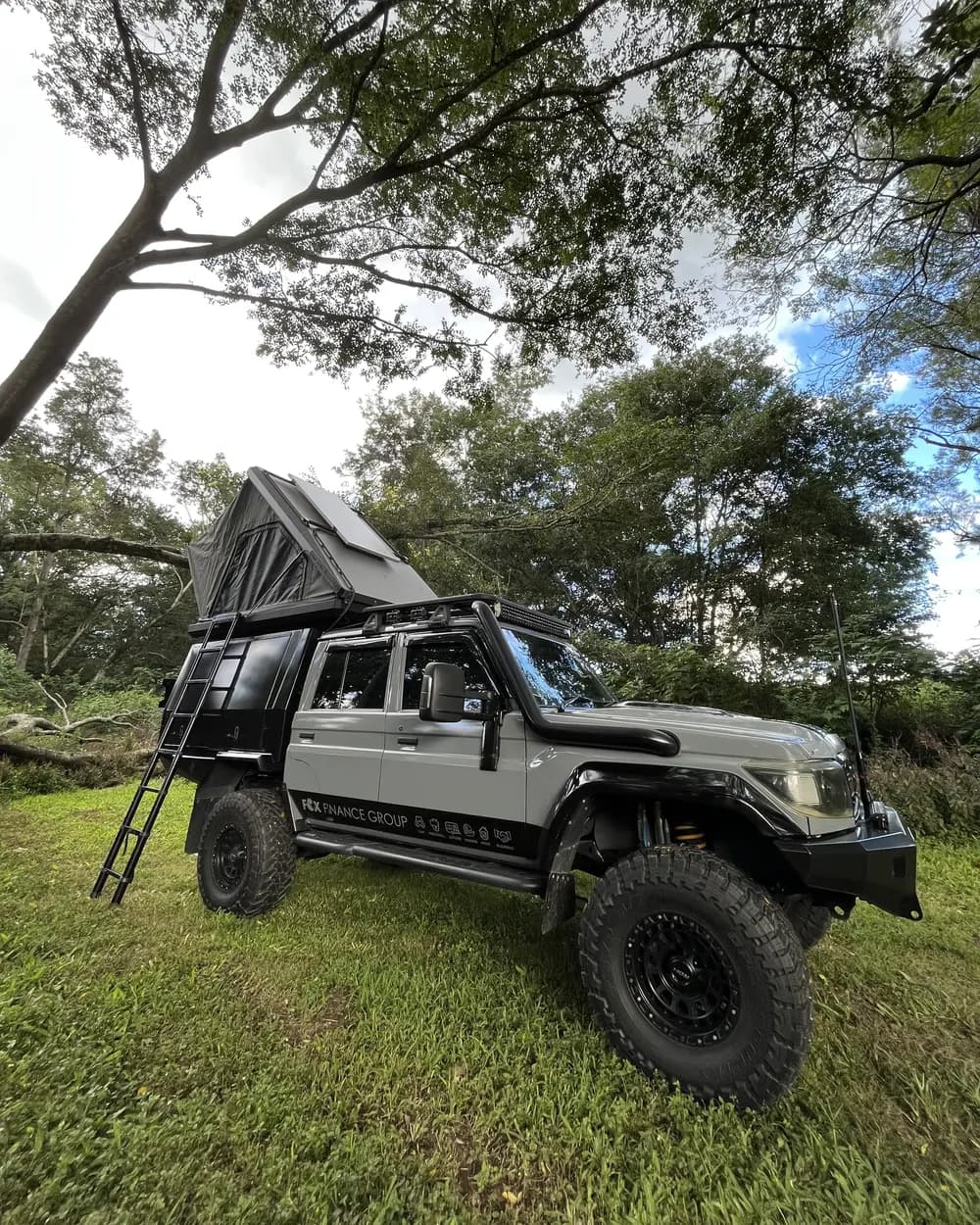
The tent may sit on the 4x4 roof, canopy roof or another properly designed mounting system.
The mounting decision can affect:
- roof-load limits
- centre of gravity
- canopy design
- roof-rack layout
- solar panel space
- awning mounting
- ladder position
- overall 4x4 height
- access to other equipment
Confirm the relevant static and dynamic load requirements for the 4x4, roof rack, canopy and mounting system rather than assuming the highest individual rating applies to the whole combination.
Think About the Ladder
The ladder is a small part of the purchase that can have a big impact on everyday use.
Consider:
- which side of the 4x4 it will sit on
- whether it blocks canopy doors
- how much clear ground is needed
- how easy it is to use at night
- whether children or less-mobile travellers can use it comfortably
- how it packs away
The best ladder location is one that works with the canopy, awning and normal camp layout rather than competing with them.
Awning Type and Coverage
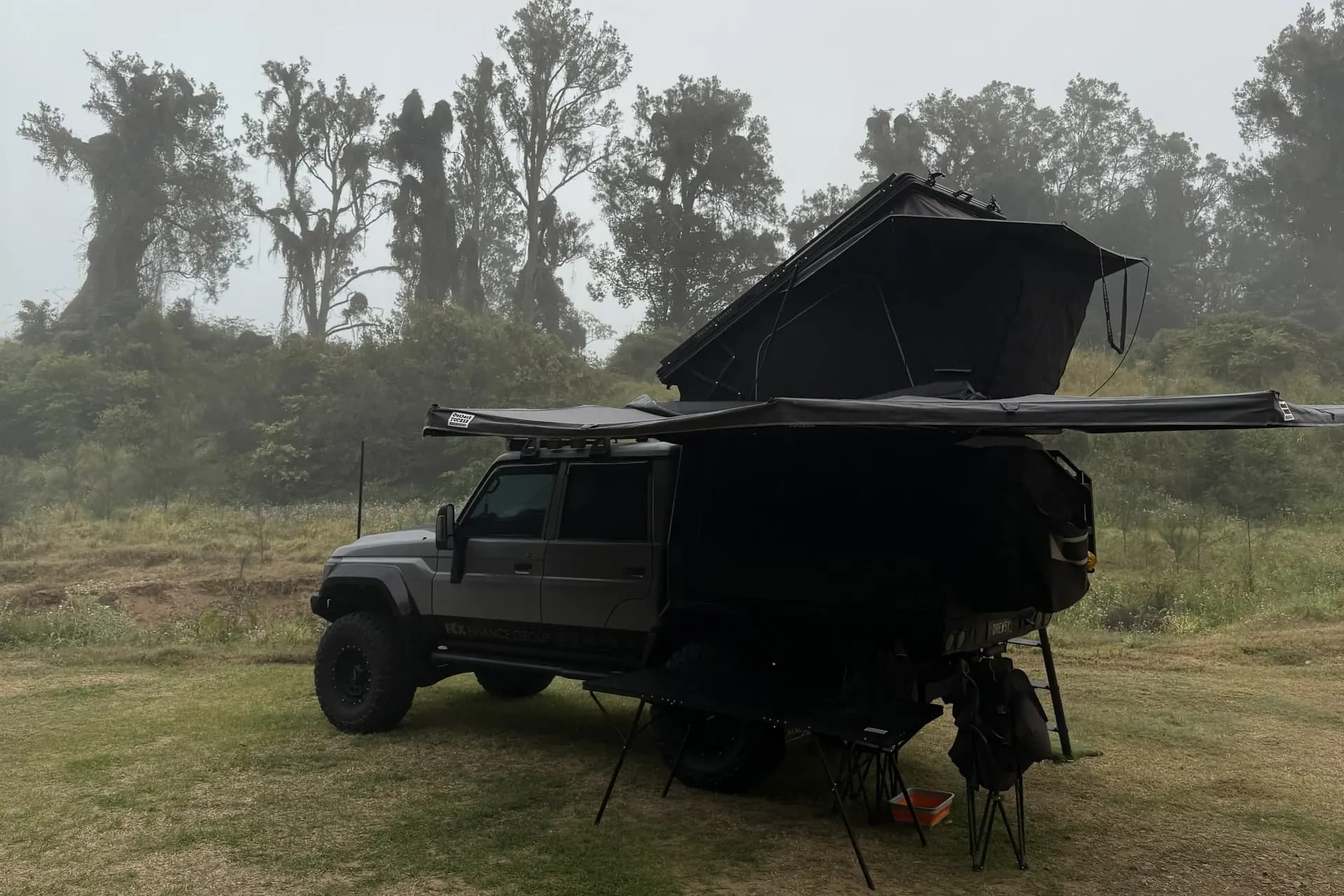
An awning creates the outdoor living area around the 4x4.
Common planning questions include:
- How much side coverage is needed?
- Is rear coverage useful?
- Will the awning be used for cooking?
- Will it cover the fridge or canopy doors?
- How quickly can it be deployed?
- Does it need poles or guy ropes?
- How will it handle changing weather?
- Will walls or an annex be added?
A larger awning can create excellent living space, but setup, packed size, mounting and wind management still matter.
Put the Tent and Awning Into the Same Camp Layout
The rooftop tent and awning work best when they are planned together.
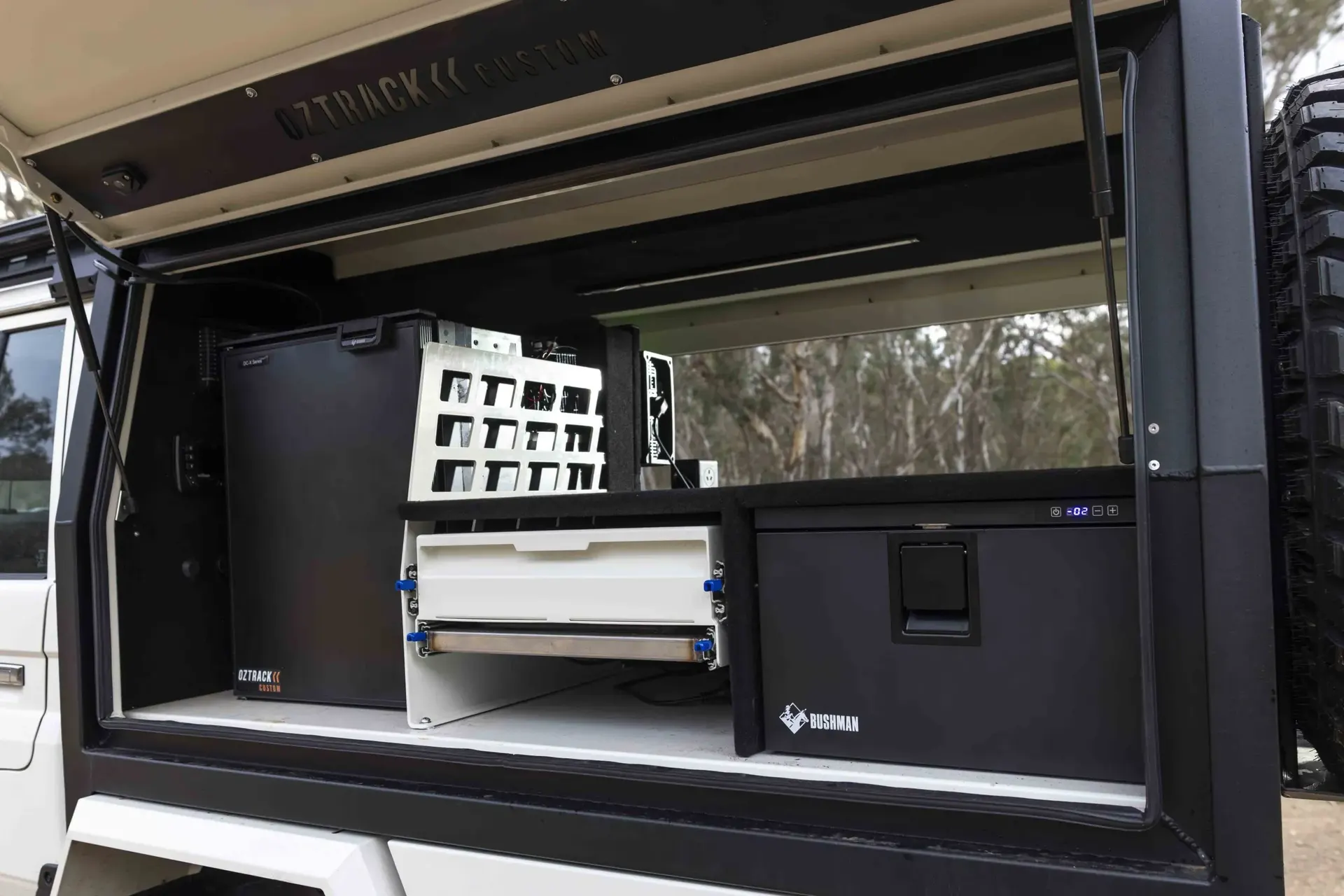
Think about where the ladder lands, where the fridge opens, where the kitchen sits, where water is accessed and which canopy doors need to open while the awning is deployed.
A good camp layout makes the everyday movements around the 4x4 simple.
Weather and Ventilation
Touring tents and awnings need to work in more than perfect weather.
Think about:
- ventilation in warm conditions
- condensation management
- rain entry during setup and pack-down
- wind exposure
- shade
- wet fabric
- drying and storage after rain
For longer touring, the ability to manage ordinary hot, wet and windy days can matter more than how quickly the tent opens in ideal conditions.
Bedding and Everyday Comfort
A rooftop tent can simplify camp life if the bedding can remain inside when packed, but this depends on the individual tent design and how much bedding is used.
Think about mattress comfort, ventilation, internal storage, charging points, lighting and how easy it is to get in and out during the night.
Creature comforts are part of the adventure. A setup that helps everyone sleep well can make the next day's travel far more enjoyable.
Family Sleeping Arrangements
For a Family Getaway Explorer, the rooftop tent may be only part of the sleeping plan.
Options can include:
- adults in the rooftop tent and children in a ground tent
- a larger rooftop tent where the design suits the family
- rooftop tent plus annex
- rooftop tent combined with a camper or caravan on different trips
Plan around how the family will use the setup as children grow, not only the first weekend away.
Weight, Roof Load and 4x4 Height
A rooftop tent, roof rack, awning and mounting hardware all add weight high on the 4x4.
The 4x4, roof system and canopy can each have relevant load limits, and the complete touring setup also needs to remain within the 4x4's wider weight limits.
The overall height also changes once the tent is fitted, which can matter for garages, carparks, ferries, low branches and everyday access.
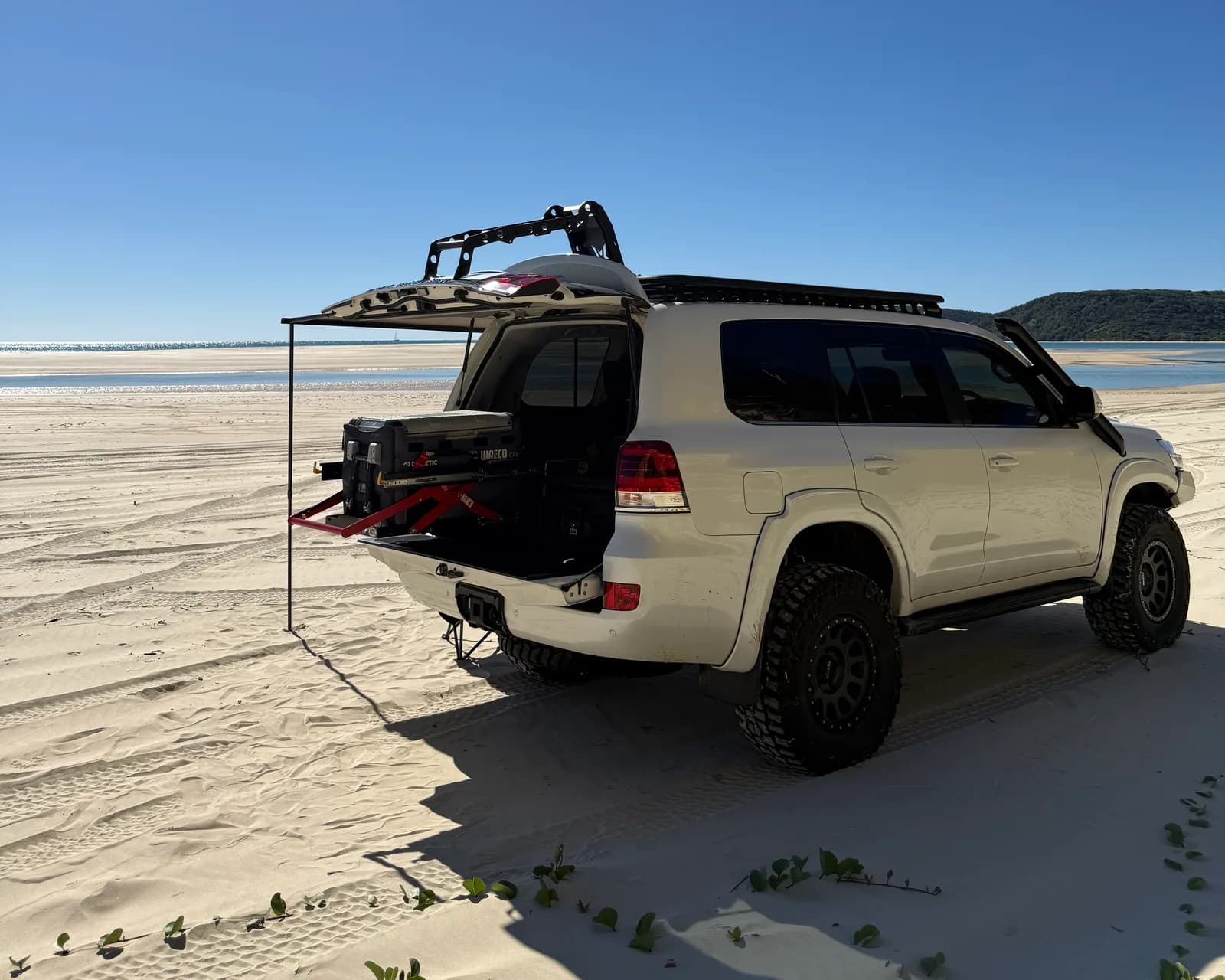 Related GuideGVM Upgrades
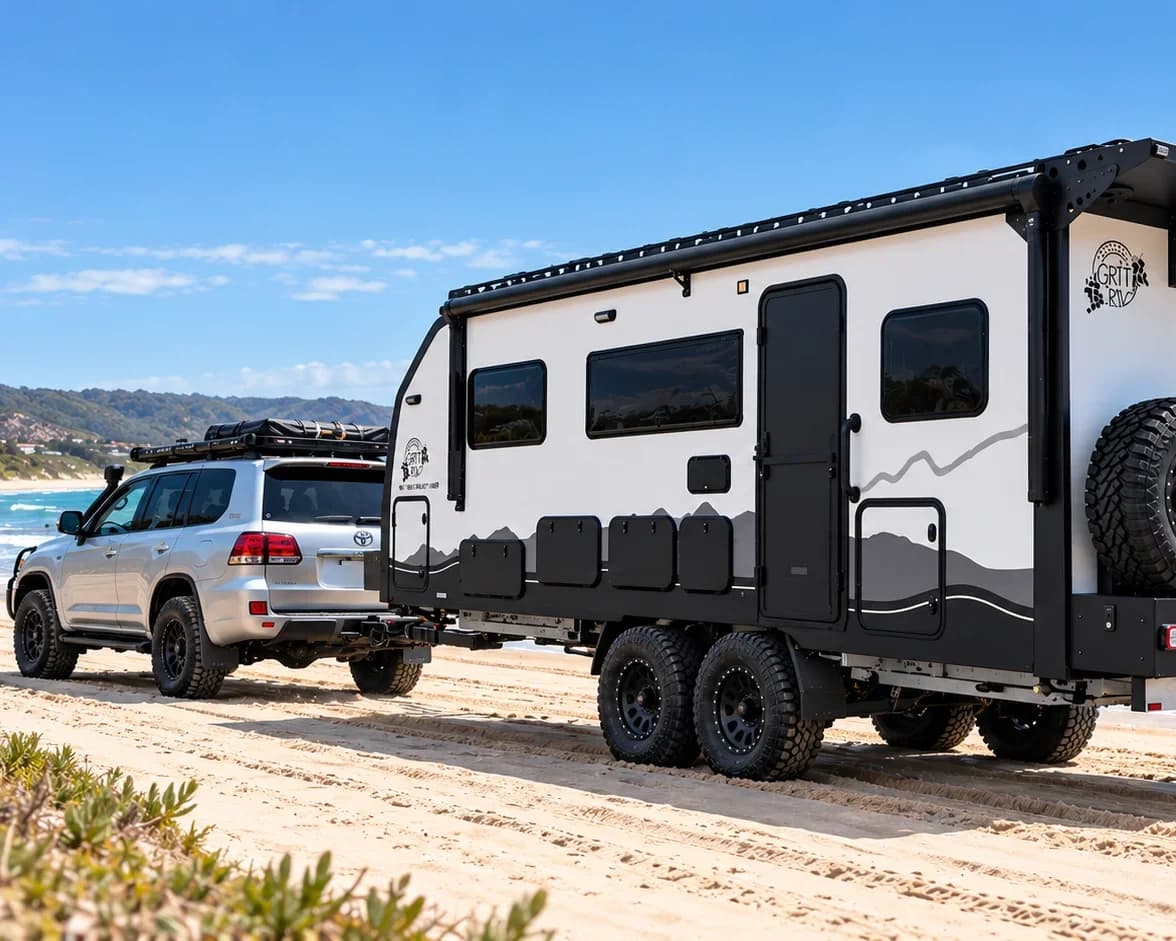 Related GuideGVM vs GCM
Solar and Roof Space
Rooftop tents and awnings can compete with solar panels and other roof-mounted equipment for space.
If the touring setup relies on solar, plan the roof layout before the mounting system is finalised.
Some setups may use fixed solar, portable solar or a combination depending on the 4x4 and travel style.
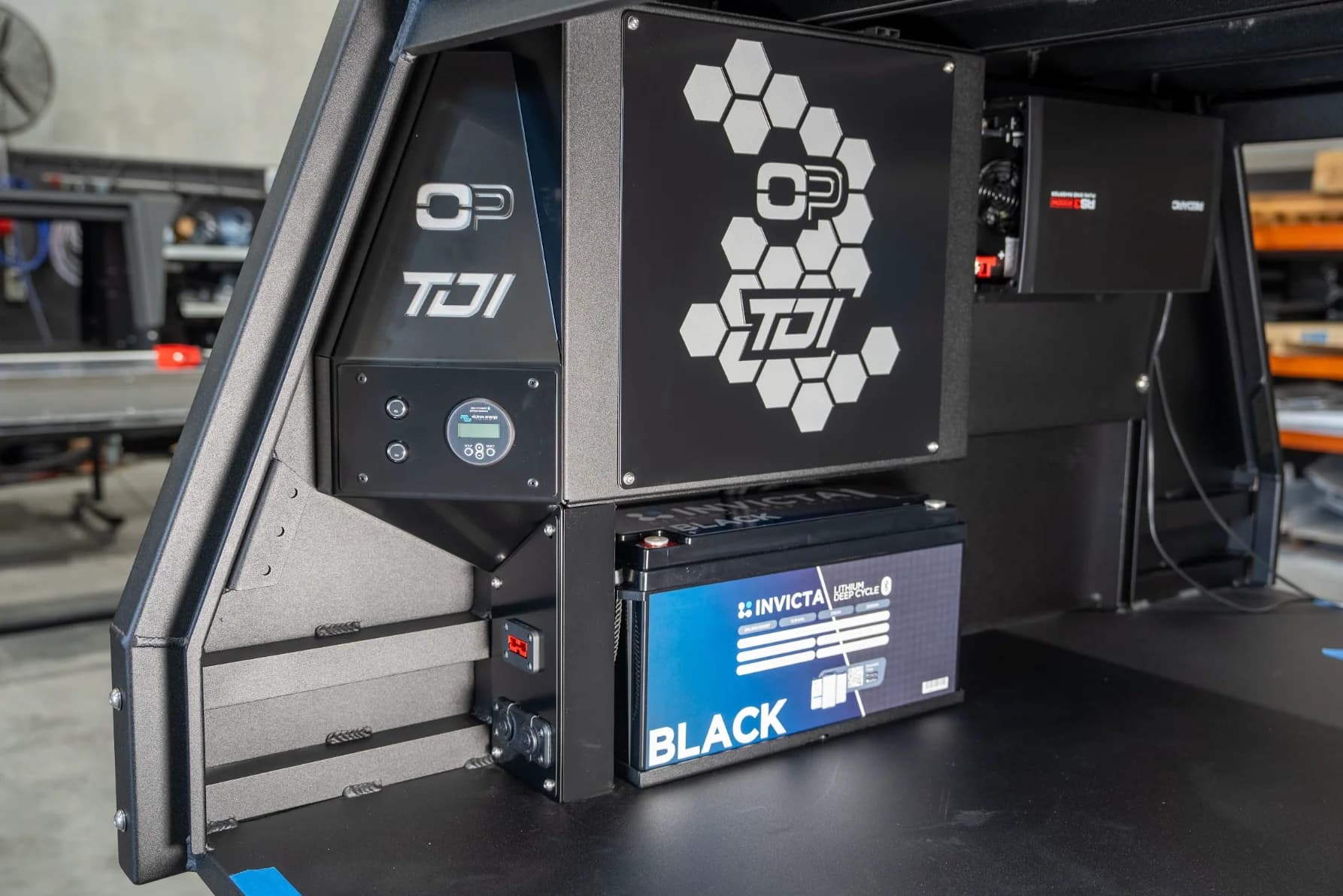 Related GuideLithium Battery Setup for Touring
What Happens When the 4x4 Needs to Move?
A rooftop tent is attached to the 4x4. If the tent is set up, moving the 4x4 normally means packing it away.
That can be a benefit for travellers who move frequently, but it can be less convenient for people who want to establish camp and then use the 4x4 for day trips.
Think about how often the 4x4 needs to leave camp once the sleeping setup is open.
Rooftop Tent & Awning Planning Checklist
Tick it off as you plan
Questions to Ask Before Choosing
How quickly does the tent set up and pack away?
Can bedding remain inside when packed?
How many people can use the sleeping space comfortably?
What mounting system is required?
What are the relevant load requirements?
Where will the ladder sit?
Will the tent interfere with canopy doors or roof equipment?
How is ventilation handled?
How does the setup manage rain and wet pack-down?
What awning layout works with the tent?
Can walls or an annex be added later?
How much 4x4 height will the setup add?
Will solar still fit where I want it?
Can the 4x4 still be used easily when camp is set up?
Key Takeaways
- Choose the sleeping setup around how you actually travel.
- Fast setup matters more when you move camp frequently.
- Plan the rooftop tent, ladder, awning and canopy access together.
- Comfort, ventilation and weather performance matter as much as setup speed.
- Family sleeping arrangements may involve more than the rooftop tent alone.
- Roof load, overall 4x4 weight and 4x4 height all belong in the planning conversation.
- Plan solar and other roof-mounted equipment before the mounting system is finalised.
- Think about whether the 4x4 needs to leave camp once the rooftop tent is open.
- Use the real camp layout to decide what actually earns its place.
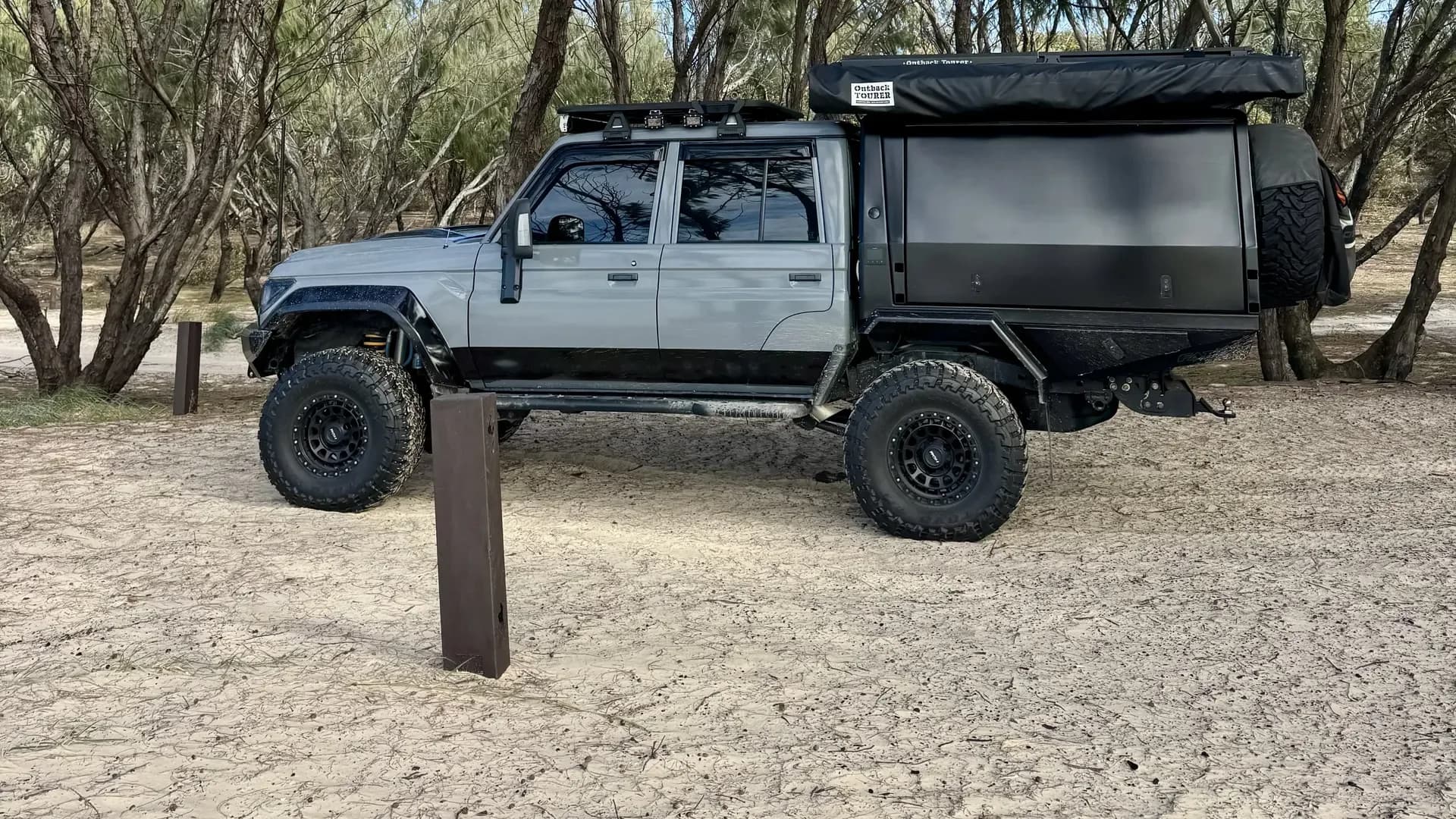
Drewsy's 79: A Real Camp-Setup Example
Drewsy's 79 gives Built for Adventure a practical way to show how the rooftop tent, ladder, awning, canopy and camp access work together.
The Outback Tourer rooftop tent and real camp-setup content can show setup time, ladder position, canopy access, packing, sleeping comfort and how the 4x4 is actually used once camp is established.
That real-use view is more valuable than treating the rooftop tent as a product sitting on the roof.
Follow @drewsys79Common Questions
Is a rooftop tent good for weekend camping?
It can be a strong option for travellers who value a repeatable sleeping setup attached to the 4x4 and who regularly move between camps.
Is a hard-shell rooftop tent better than a soft-shell tent?
Not universally. Hard-shell and soft-shell designs offer different trade-offs in setup, sleeping space, packed form, access and mounting.
Can I put a rooftop tent on a canopy?
Yes, where the canopy and mounting system are designed and rated for the load. The relevant supplier and 4x4 requirements need to be confirmed.
Does a rooftop tent affect GVM?
Yes. The tent, rack, awning and mounting equipment all add to the 4x4's loaded weight and belong in the broader payload and GVM planning.
Can I have solar and a rooftop tent?
Yes, where the available mounting space, load requirements and system layout allow it. Plan the roof layout before the mounting system is finalised.
Is a 270-degree awning useful for touring?
It can be useful where broad side and rear shelter suits the camp layout, but the best awning depends on mounting, setup style, wind management and the coverage actually needed.
Can I leave the rooftop tent set up and drive away from camp?
No. A 4x4-mounted rooftop tent normally needs to be packed away before the 4x4 is driven.
Finance Your Adventure
If the rooftop tent, awning and broader 4x4 setup has moved from planning into a real purchase decision, Adventure Finance is the separate specialist finance pathway. Built for Adventure keeps this Guide focused on planning the camp setup itself. Questions about pre-approval, lender criteria, rates, terms or whether eligible integrated touring equipment can be financed belong with Adventure Finance.